
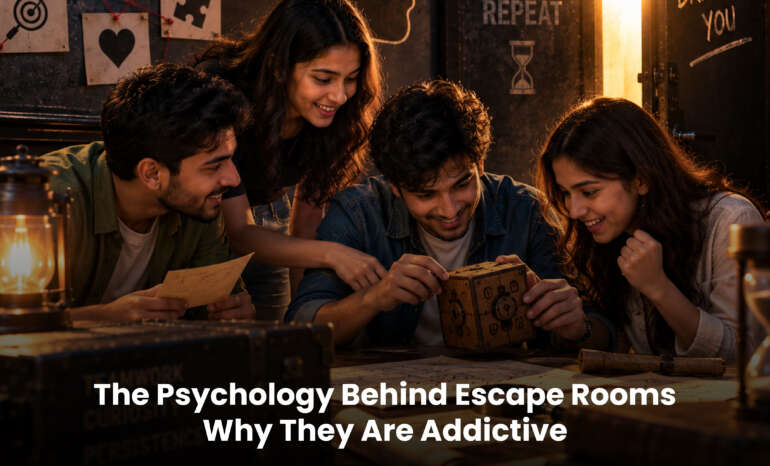
What Happens Inside Your Brain During an Escape Room?
An escape room is much more than a game. It is a carefully designed experience that stimulates multiple areas of the brain simultaneously.
As players search for clues, solve puzzles, and uncover hidden secrets, their brains remain highly engaged and focused.
Several psychological factors contribute to the excitement and enjoyment of escape rooms, making them uniquely rewarding experiences.
Why Escape Rooms Feel So Addictive
1. The Dopamine Reward System
Every time you solve a puzzle or discover a clue, your brain releases dopamine—a neurotransmitter associated with pleasure, motivation, and reward.
This creates a sense of accomplishment and encourages you to continue solving challenges.
The more progress you make, the more rewarding the experience becomes.
2. The Thrill of the Challenge
Humans naturally enjoy overcoming obstacles.
Escape rooms present a series of challenges that feel difficult enough to be exciting but achievable enough to remain motivating.
This balance keeps players engaged throughout the experience.
3. The Power of Curiosity
Curiosity is one of the strongest psychological motivators.
When players enter an escape room, they immediately want to know:
• What happened here?
• What secrets are hidden?
• How does the story end?
• What does this clue mean?
The desire to uncover answers keeps players fully invested in the experience.
4. A Sense of Achievement
Successfully solving a puzzle provides instant satisfaction.
Completing an entire escape room creates an even stronger feeling of accomplishment, boosting confidence and encouraging repeat visits.
5. Immersive Storytelling
People naturally connect with stories.
Escape rooms place players at the center of a narrative, transforming them from observers into active participants.
Whether solving a mystery or escaping from a prison, players become emotionally invested in the outcome.
How Time Pressure Increases Excitement
One of the defining features of an escape room is the countdown clock.
Knowing that time is limited creates urgency and heightens focus.
This psychological effect:
• Increases concentration
• Enhances excitement
• Encourages quick thinking
• Makes success feel more rewarding
The ticking clock transforms every decision into a meaningful moment.
The Social Psychology of Teamwork
Escape rooms are rarely played alone.
They are designed to encourage collaboration, communication, and teamwork.
Players experience:
Shared Goals
Everyone works toward the same objective, creating a strong sense of unity.
Group Problem-Solving
Teams combine different perspectives and skills to solve challenges.
Social Connection
Successfully overcoming obstacles together strengthens relationships and creates positive shared memories.
These social rewards make escape rooms highly enjoyable and memorable.
Why Escape Rooms Create a State of Flow
Psychologists describe “flow” as a mental state where a person becomes fully immersed in an activity.
During flow, individuals experience:
• Complete concentration
• Reduced awareness of distractions
• Increased enjoyment
• Higher levels of performance
Escape rooms are specifically designed to create this state by providing clear goals, immediate feedback, and engaging challenges.
This is one reason why time often feels like it passes so quickly during the game.
The Emotional Benefits of Escape Rooms
Beyond entertainment, escape rooms offer several psychological benefits.
They can help:
• Improve problem-solving skills
• Strengthen communication abilities
• Boost confidence
• Reduce stress through focused engagement
• Encourage creative thinking
• Build stronger social connections
These positive outcomes contribute to the lasting appeal of escape room experiences.
Why People Keep Coming Back
Unlike many forms of entertainment, escape rooms constantly offer something new.
Players return because they enjoy:
• New themes and storylines
• Different puzzle styles
• Fresh challenges
• Unique environments
• The excitement of beating the clock
Each room presents a completely different adventure, keeping the experience exciting and unpredictable.
The Perfect Combination of Fun and Psychology
Escape rooms combine several powerful psychological elements:
• Curiosity
• Challenge
• Achievement
• Teamwork
• Competition
• Storytelling
• Reward
Together, these elements create an experience that is engaging, memorable, and highly addictive.
Final Thoughts
The popularity of escape rooms isn’t accidental. They are carefully designed experiences that tap into fundamental aspects of human psychology.
From dopamine-driven rewards and immersive storytelling to teamwork and problem-solving, escape rooms provide the perfect balance of challenge and enjoyment.
Whether you’re a first-time player or an experienced enthusiast, the excitement of discovering clues, solving puzzles, and racing against the clock continues to make escape rooms one of the most addictive and rewarding adventure experiences available today.
Ready to Experience the Challenge?
Gather your friends, family, or colleagues and step into a world of mystery, excitement, and discovery.
Book your next escape room adventure and find out why players keep coming back for more.